
Search Posts
ERPCorp SAP FICO Blog
- Hits: 108935

What Is a Trading Partner in SAP?
A Trading Partner identifies the other company involved in an intercompany transaction. The field VBUND helps distinguish group-company transactions from external business and supports intercompany reconciliation and financial consolidation.
Reliable Trading Partner reporting starts with company configuration and consistent customer, supplier, and G/L account master data. A missing or incorrect partner can leave balances difficult to reconcile or eliminate at group close.
Read more: SAP Trading Partner Configuration and Master Data — Part I
- Hits: 21804
By Ross Christoph

SAP outsourced manufacturing connects subcontracting procurement with component consumption and manufacturing cost analysis. The Outsourced Manufacturing business function (LOG_MM_OM_1), introduced with SAP ERP 6.0 Enhancement Package 4 (EHP4), added capabilities for timely consumption and integration with Cost Object Controlling.
Scope: This article develops Ross Christoph’s original 2015 implementation note. The EHP4 functionality is discussed in its SAP ERP context, with references to related SAP S/4HANA on-premise documentation. The appropriate design depends on your installed release, integration landscape, and process requirements.
Read more: SAP Outsourced Manufacturing: EHP4 and LOG_MM_OM_1
- Hits: 20154

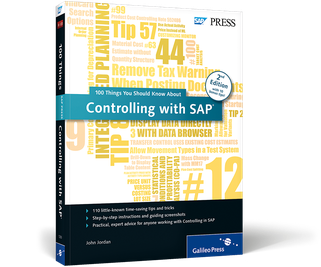
Learn More: 100 THINGS YOU SHOULD KNOW ABOUT CONTROLLING WITH SAP
SAP Material Ledger has two main functions:
Carry inventory in up to two additional valuations and actual costs, as we explain in detail below:
Read more: SAP Material Ledger - Excerpt: 100 Things You Should Know About Controlling with SAP
- Hits: 147192
By Janet Salmon

SAP Accounting powered by SAP HANA introduced significant changes to financial accounting and management accounting by simplifying data structures and enabling more flexible reporting.
Originally introduced in 2014, the solution was part of SAP's transition toward simplified financial data structures and was followed by SAP Simple Finance and the subsequent evolution of SAP S/4HANA Finance.
This article, originally written by Janet Salmon, answers frequently asked questions about SAP Accounting powered by SAP HANA, including its architecture, reporting capabilities, deployment options, and business benefits.
Historical context: The discussion reflects SAP technology and implementation options available in 2014. Since then, SAP S/4HANA Finance has introduced the Universal Journal, further integrating Financial Accounting (FI) and Controlling (CO).
The original technical explanations remain valuable for understanding the evolution of SAP Finance.
Original 2014 Article
I've been working with the first accounting customers to validate and implement SAP Accounting powered by SAP HANA.
SAP Accounting powered by SAP HANA became available on August 1, 2014. This article explains how the solution differed from earlier SAP accounting architectures and shares what I learned from early customer implementations.
Read more: SAP Accounting Powered by SAP HANA: FAQs and S/4HANA Evolution
- Hits: 60805
By Paul Ovigele

Quantity fields in SAP costing-based Profitability Analysis (CO-PA) give sales and contribution margin reports the context needed to interpret revenue and costs. Sales quantities, production quantities, and measures such as net weight must be mapped to the appropriate quantity value fields.
This guide covers three sources: sales documents using KE4M, manufacturing order settlement using a PA transfer structure, and direct FI postings. Quantity value fields are defined with the relevant quantity attribute, as illustrated by the original KEA6 configuration examples.
SAP S/4HANA scope: These value-field mappings apply to costing-based CO-PA. SAP documents that Margin Analysis does not use value fields. The screenshots below are historical SAP GUI examples from Paul Ovigele’s original article; availability and settings depend on the release and process. For a related S/4HANA topic, see Margin Analysis extensibility and custom characteristics.
Read more: Updating Quantity Fields in SAP Costing-Based CO-PA
- Hits: 115154
By Paul Ovigele

SAP Material Ledger supports inventory valuation in multiple currencies and valuation views. Its optional Actual Costing functionality calculates periodic actual material costs and helps explain differences between preliminary valuation and actual procurement and production costs.
SAP S/4HANA update: Material Ledger is mandatory for inventory valuation in SAP S/4HANA, while Actual Costing remains optional. Paul Ovigele’s original introduction is presented below with editorial updates by ERPCorp for S/4HANA terminology and scope.
Read more: SAP Material Ledger in S/4HANA: Overview and Actual Costing
- Hits: 289247
By Ross Christoph

Goods Receipt/Invoice Receipt (GR/IR) clearing is an important part of the procure-to-pay process in SAP Materials Management (MM) and Financial Accounting (FI). The GR/IR clearing account is an interim G/L account that records the offsetting entries for valuated goods receipts and related supplier invoices. Either document may be posted first. Matching postings normally offset at purchase order item level; eligible FI open items are subsequently cleared through automatic clearing.
The purchasing process typically involves three documents:
- Purchase Order (PO): Specifies the materials or services ordered, quantities, and agreed prices.
- Goods Receipt (GR): Records the receipt of materials or services against the purchase order.
- Invoice Receipt (IR): Records the supplier invoice and verifies it against the purchase order and goods receipt.
In a standard valuated purchase order process, the goods receipt credits GR/IR and the invoice receipt debits it. Non-valuated receipts and other procurement scenarios can follow different posting logic.
Outstanding balances may indicate missing invoices, incomplete deliveries, or quantity differences requiring investigation.
In SAP S/4HANA, GR/IR reconciliation helps organizations identify outstanding differences and maintain accurate inventory, purchasing, and financial accounting records.
Read more: SAP GR/IR Clearing: Goods Receipt and Invoice Receipt
- Hits: 11328
Activity type tutorials by Tom King
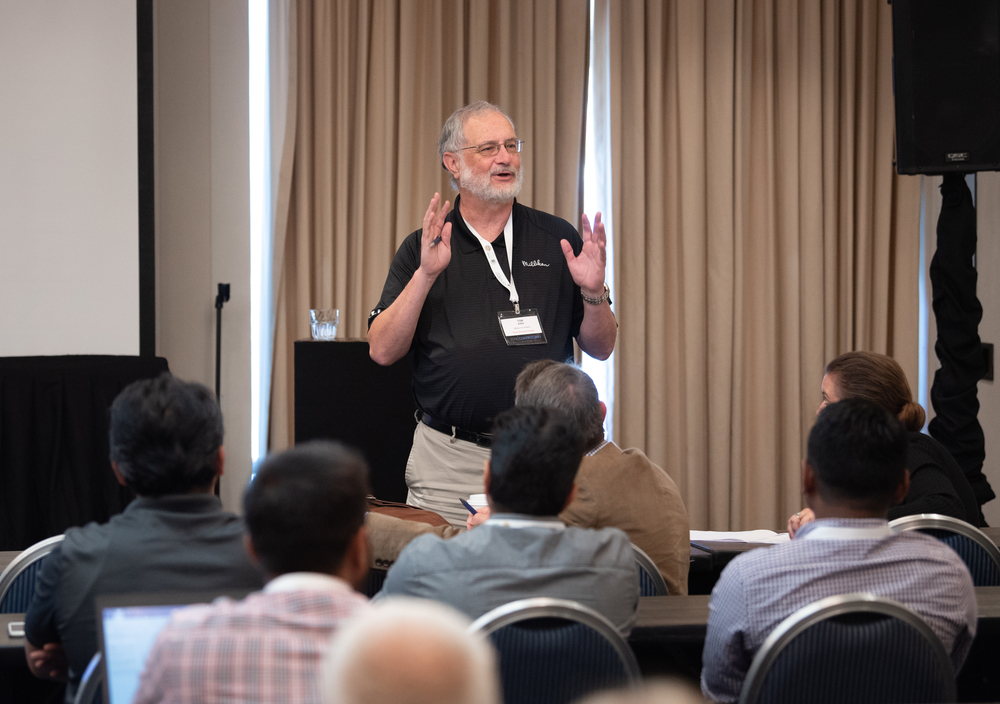
SAP activity types classify work performed by cost centers, such as machine hours or maintenance hours. The activity type category controls how quantities are recorded and allocated, while the activity price values the allocation.
This guide brings together Tom King's seven-part activity posting series. Compare the classic categories, choose a starting point, and follow the worked examples for direct, indirect, and target=actual activity allocation.
Read more: SAP Activity Type Categories: Guide to the Posting Series
- Hits: 15979
By Tom King

SAP activity type category 5 supports target=actual activity allocation. In the classic process, SAP calculates actual activity quantities from planned receiver activity inputs and operating rates, then posts the allocation with transaction KNMA.
This final tutorial in the activity posting series compares fixed and variable planned allocations. Both examples use activity type CATEG5 to allocate support activity from a sender cost center to manufacturing cost centers.
Read more: SAP Category 5 Activity Types: Target=Actual Allocation