
By John Jordan
In SAP S/4HANA, materials are typically valuated using either Standard Price (S) or Moving Average Price (V). The appropriate price control depends on the type of material and how you want inventory price differences to be handled.
Standard Price keeps current-period valuation stable and records relevant differences separately. Moving Average Price adjusts the inventory price as valuation-relevant receipts and invoice differences change stock value. This guide compares the posting effects and explains how each method relates to Material Ledger and optional Actual Costing.
Where to Find Price Control in the Material Master
In SAP ECC and SAP S/4HANA on-premise or Private Edition, you can maintain the price control indicator with transaction MM02 or by following the menu path:
Logistics - Material Master - Material - Change
Navigate to the Costing 2 view to display the screen shown in Figure 1.
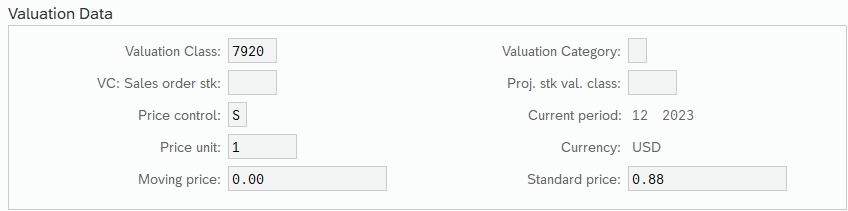
Figure 1: Costing 2 View - Valuation Data
The Valuation Data section contains the Price Control indicator, which determines whether a material is valuated using Standard Price (S) or Moving Average Price (V). Price control can be changed under certain conditions, subject to SAP's restrictions for the material and its current valuation. When changing from Standard Price to Moving Average Price, the moving average price is initialized using the standard price so that the change in price control does not itself change the inventory value.
Moving Average Price
SAP recommends Moving Average Price primarily for raw materials and trading goods that do not participate in Actual Costing. Purchase-order goods receipts update inventory at the relevant receipt value. Invoice price differences generally adjust stock value when sufficient stock coverage exists; other goods movements typically use the current moving average price. This provides a more current view of procurement costs, although price differences may be posted separately in certain circumstances.
You can read more details on stock coverage and moving average prices in SAP Note 81682 and Paul Ovigele's SAP Material Ledger blog.
Standard Price
When purchased materials use Standard Price, differences between the standard price and actual procurement costs are posted to price difference accounts rather than changing the inventory valuation. These Purchase Price Variances (PPV) can be analyzed to understand why actual procurement costs differ from the standard price.
For materials participating in Actual Costing with SAP Material Ledger, use Price Determination 3 with Price Control S, including relevant raw materials and trading goods.
Material Ledger is mandatory in SAP S/4HANA, while Actual Costing is optional. Material Price Analysis (transactions CKM3 and CKM3N) can be used to analyze material valuation transactions and price differences. When Actual Costing is active, Material Price Analysis also provides detailed information about the material's actual costs and price determination, as shown in Figure 2.
To understand how price control S and V interact with price determination 2 and 3, see our guide to Material Price Determination in SAP S/4HANA Material Ledger.
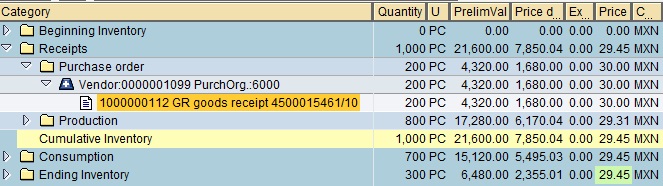
Figure 2: Material Price Analysis (CKM3)
You can expand the hierarchy and double-click a document number to display a material ledger document.
Standard Price vs. Moving Average Price: Example
Assume opening stock of 100 units valued at $10 each. You receive another 100 units at a purchase order price of $12 each, with no other movements, taxes, freight, or exchange-rate differences. Table 1 compares the goods receipt under each price control.
| Result after Goods Receipt | Standard Price (S) | Moving Average Price (V) |
|---|---|---|
| Stock quantity | 200 units | 200 units |
| Inventory value | $2,000 | $2,200 |
| Valuation price per unit | $10.00 | $11.00 |
| Separate price difference | $200 expense | None for this receipt |
Table 1: Goods Receipt Valuation under Standard and Moving Average Price
For V, the new moving average price is $2,200 ÷ 200 = $11.00. For S, the receipt adds $1,000 to inventory and records the $200 difference separately. Subsequent invoice differences depend on price control, stock coverage, and the posting circumstances.
Choosing the Right Method
The choice of inventory valuation method depends on the material and the organization's costing requirements:
- Standard Price (S) provides stable inventory valuation and makes procurement and production variances visible for analysis.
- Moving Average Price (V) updates inventory values based on procurement costs and is generally recommended for raw materials and trading goods that do not participate in Actual Costing.
- Actual Costing with Material Ledger retains preliminary valuation during the period and can calculate actual material prices at period-end based on actual costs and variances.
Conclusion
Choose price control according to your valuation and reporting requirements. Standard Price separates relevant price differences from current-period inventory valuation; Moving Average Price incorporates valuation-relevant procurement changes into stock value. Materials participating in Actual Costing use price determination 3 with price control S, with actual prices calculated during period-end closing.
Choosing the Right Price Control for Your Materials?
Get help aligning standard and moving average prices with your inventory valuation, variance analysis, and Actual Costing requirements.
ERPCorp helps your team review material master settings, investigate price differences, and improve Product Costing and Material Ledger processes in SAP S/4HANA.
Glossary
Actual Costing
An optional Material Ledger function that collects actual costs and variances and calculates a periodic unit price at period-end. Materials participating in Actual Costing require Price Determination 3 and Price Control S.
Goods Receipt
A posting that records the receipt of materials from a supplier or production. A receipt into stock increases inventory quantity.
Invoice Receipt
The posting of a supplier invoice. Differences between invoice and goods receipt values are handled according to price control, stock coverage, and other valuation settings.
Material Ledger
The material valuation functionality required in SAP S/4HANA. It supports valuation in multiple currencies and provides the basis for optional Actual Costing.
Material Price Analysis (CKM3/CKM3N)
A report for analyzing a material's valuation transactions, price differences, and Material Ledger values. With Actual Costing, it also displays price determination results.
Moving Average Price (V)
A price control that adjusts the material price as valuation-relevant receipts and invoice differences update stock value. Stock coverage and other posting conditions can cause some differences to be posted to price difference accounts.
Periodic Unit Price
The price calculated for a period using actual costs in Material Ledger Actual Costing. It can be used for period-end revaluation according to the closing settings.
Price Control
The material master indicator that determines whether inventory is valued using Standard Price (S) or Moving Average Price (V).
Price Determination
A Material Ledger setting that determines how material prices are calculated. Price Determination 2 supports transaction-based price determination; Price Determination 3 supports single-level and multilevel price determination and requires Price Control S.
Purchase Price Variance (PPV)
A difference between the standard valuation price and the procurement price. For materials with Price Control S, procurement price differences are recorded in price difference accounts.
Standard Price (S)
A price control that values material inventory at a fixed price. Differences from actual procurement or production costs are recorded separately as price differences.
Stock Coverage
The stock quantity available to absorb an invoice price difference. With Moving Average Price, insufficient stock coverage can cause part of the difference to be posted to a price difference account.