
By John Jordan

Actual Costing in SAP Material Ledger enables organizations to calculate the actual cost of materials by collecting and allocating price differences incurred during a period. These differences can arise from purchase price variances, production variances, and other inventory-related transactions.
At period-end, Actual Costing calculates a periodic unit price (PUP) that reflects the actual costs of procuring and producing materials. This provides greater transparency into material costs, inventory valuation, and cost of goods sold.
In SAP S/4HANA, Material Ledger is mandatory for inventory valuation, while Actual Costing remains optional.
Inventory Revaluation Options in SAP Actual Costing
1. Revalue Inventory at Actual Cost
At period-end, Actual Costing calculates the periodic unit price (PUP) and determines the proportion of price differences attributable to ending inventory. When inventory revaluation is performed, the material stock account is adjusted by these differences, with an offsetting posting to the relevant price difference account.
For more information about inventory valuation methods, see our article on Choosing Standard or Moving Average Price.
For positive price differences, the inventory account is debited and the price difference account is credited. Negative differences result in the opposite posting.
The calculated periodic unit price can also be used to update the material's standard price for the following period, depending on the configured price update settings.
2. Do Not Revalue Inventory
If inventory revaluation is not performed, the price differences attributable to ending inventory are not posted to the material stock account. Instead, the differences remain recorded in or are transferred to the relevant price difference accounts, depending on the configuration.
Actual Costing can still calculate the periodic unit price for analysis and reporting without revaluing inventory in the general ledger.
How to Activate Actual Costing in SAP S/4HANA
You activate actual costing with the IMG menu path:
Controlling - Product Cost Controlling - Actual Costing / Material Ledger - Actual Costing - Activate Actual Costing
The screen shown in Figure 1 is displayed.

Figure 1: Activate Actual Costing
Figure 1 shows the configuration settings for activating Actual Costing and controlling how actual activity consumption is updated in the quantity structure.
Act. Costing (3rd column: Activate Actual Costing): Select this checkbox to activate Actual Costing for the valuation area. Actual Costing enables the calculation of periodic unit prices (PUPs) by collecting and allocating material price differences during period-end closing.
ActAct (4th column: Update of Activity Consumption in the Quantity Structure): This setting determines whether actual activity consumption is updated in the Actual Costing quantity structure and whether the update is relevant to price determination.
The actual quantity structure captures material consumption and relevant activity quantities during production, providing the basis for multilevel Actual Costing.
To display the available settings, select Possible Entries (F4) for the ActAct field, as shown in Figure 1.
The three possible settings are:
0. No Activity Update: Actual activity consumption is not updated in the Actual Costing quantity structure.
1. Activity Update Not Relevant to Price Determination: Actual activity consumption is updated in the quantity structure but is not considered during Actual Costing price determination.
2. Activity Update Relevant to Price Determination: Actual activity consumption is updated in the quantity structure and is relevant to price determination. Differences between the activity or process prices used during the period and the actual prices calculated at period-end can be incorporated into Actual Costing.
For multilevel Actual Costing, relevant materials must have Price Determination 3 (Single-/Multilevel) maintained in the Accounting 1 view of the material master. This material-level setting works together with Actual Costing activation at the valuation-area level to enable the collection and allocation of price differences during period-end closing.
For materials participating in Actual Costing, Price Determination 3 (Single-/Multilevel) is generally used with Price Control S (Standard Price). This combination enables preliminary valuation at standard cost while Actual Costing collects and allocates price differences to calculate the periodic unit price (PUP) at period-end.
Actual Costing Period-End Closing in SAP S/4HANA
During period-end closing, SAP Actual Costing processes the price differences collected throughout the period to calculate actual material costs. The closing process includes single-level and multilevel price determination, allocation of price differences, and, depending on configuration, revaluation of inventory and consumption.
After activating Actual Costing, you execute an Actual Costing run at period-end using transaction CKMLCP. The Actual Costing closing cockpit provides a structured process for calculating actual material costs, executing closing activities, and monitoring their completion.
The Actual Costing run screen, shown in Figure 3, is similar in layout to the standard cost estimate costing run screen.
Before executing the closing steps, assign the relevant plants to the Actual Costing run using the Plant Assignment tab, as shown in Figure 2.
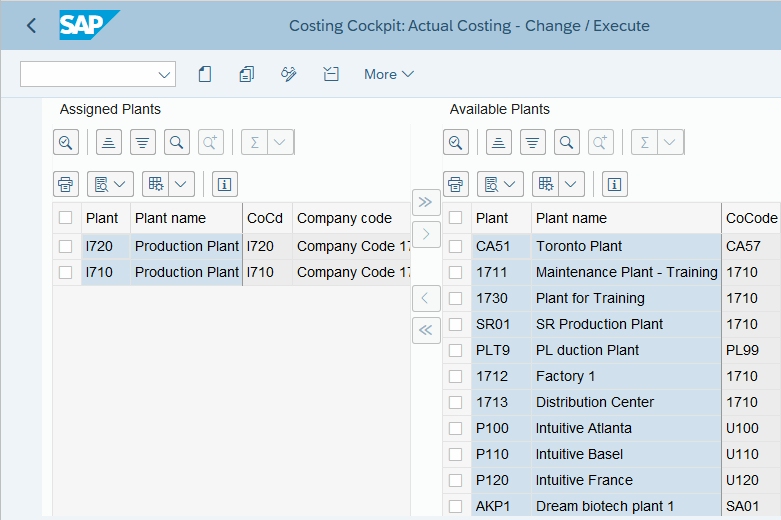
Figure 2: Assign Plants to the Actual Costing Run in CKMLCP
After assigning the relevant plants, execute the Actual Costing closing activities in the sequence shown in the Flow Step column of Figure 3. These steps guide the calculation and allocation of actual material costs during period-end closing.
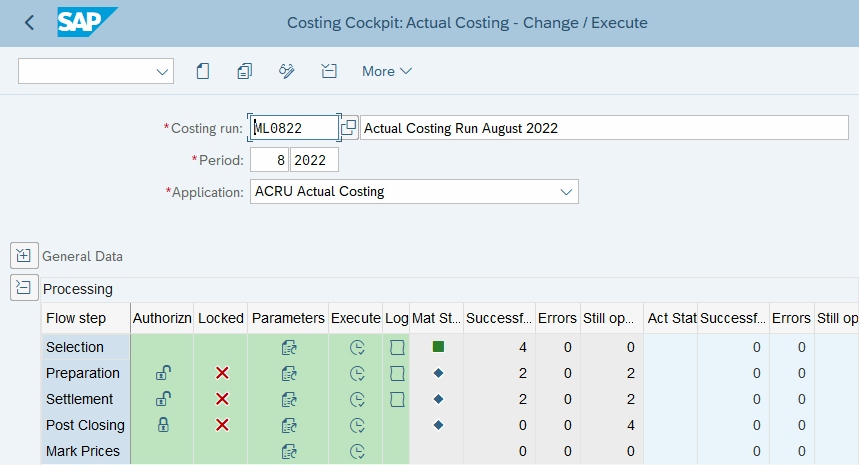
Figure 3: Actual Costing Period-End Closing Cockpit (CKMLCP)
Actual Costing Closing Steps in CKMLCP
Figure 3 shows the Actual Costing closing cockpit in transaction CKMLCP. The cockpit organizes period-end processing into five main steps:
1. Selection: Identifies the materials to be included in the Actual Costing run for the selected plants and accounting period.
2. Preparation: Performs preliminary processing and checks required before the settlement of price differences.
3. Settlement: Performs Actual Costing calculations and allocates price differences according to the configured processing logic. This includes determining actual material costs through single-level and multilevel price determination, where applicable.
4. Post Closing: Performs the relevant period-end accounting postings, including inventory revaluation where applicable.
5. Mark Prices: Marks calculated periodic unit prices for potential use as standard prices in a subsequent period. Releasing the marked prices is a separate activity, subject to the applicable price update settings.
The cockpit also displays processing status, successful results, and errors, allowing users to monitor the completion of each step.
Benefits of Actual Costing in SAP S/4HANA
Actual Costing in SAP S/4HANA provides greater visibility into differences between preliminary material valuations and actual procurement and production costs. By calculating periodic unit prices (PUPs) and allocating price differences across production levels, organizations can improve cost transparency, inventory valuation, and profitability analysis.
Actual Costing also helps manufacturers identify the impact of purchase price variances, production variances, and activity price differences on finished product costs.
For a deeper understanding of these cost differences, see our articles on SAP Purchase Price Variance and Production Variance Analysis in SAP S/4HANA.
Together, SAP Material Ledger and Actual Costing provide a framework for analyzing material costs throughout production and during period-end closing.
Optimize SAP Actual Costing and Material Ledger with ERPCorp
Is your organization realizing the full potential of SAP Material Ledger and Actual Costing?
ERPCorp helps organizations optimize SAP S/4HANA Finance and Controlling, including Product Costing, Material Ledger, production variance analysis, and period-end closing. Our consulting services help improve cost transparency, inventory valuation, and profitability analysis.
Explore ERPCorp SAP Consulting Services to improve cost transparency, streamline period-end closing, and optimize your SAP S/4HANA Finance and Controlling processes.
Glossary
Actual Costing
Actual Costing is an optional SAP Material Ledger function that collects and allocates material price differences during an accounting period. At period-end, it calculates actual material costs and periodic unit prices (PUPs), supporting inventory valuation and cost analysis.
Actual Costing Settlement
The Settlement step in the Actual Costing closing cockpit (CKMLCP) calculates and allocates relevant price differences to determine actual material costs. Depending on configuration, this includes single-level and multilevel price determination. Applicable accounting adjustments are subsequently processed during Post Closing.
Bill of Material (BOM)
A bill of material (BOM) identifies the components and quantities required to manufacture a product. In SAP Product Costing, the BOM provides the material structure used to calculate planned production costs. In multilevel Actual Costing, actual material consumption relationships help allocate price differences through successive production levels.
Cost Component Split
A cost component split organizes material costs into categories such as materials, labor, and overhead. In SAP S/4HANA Actual Costing, the actual cost component split provides visibility into the composition of actual material costs and supports analysis of differences between preliminary and actual valuations.
Material Ledger
Material Ledger is an SAP inventory valuation component that supports multiple currencies and valuations. In SAP S/4HANA, Material Ledger is mandatory for inventory valuation, while Actual Costing remains optional.
Material Master
The material master contains information required to manage a material in SAP. For Actual Costing, the Accounting 1 view includes important valuation settings, such as Price Control and Price Determination. Materials participating in single-level and multilevel Actual Costing generally use Price Determination 3.
Multilevel Price Determination
Multilevel price determination allocates relevant price differences across successive production levels using actual material consumption relationships. It enables differences associated with raw materials and semifinished products to be considered when calculating actual costs for higher-level materials.
Periodic Unit Price (PUP)
The periodic unit price is the actual material price calculated during Actual Costing period-end closing. It considers relevant preliminary inventory values and allocated price differences to determine the material's actual cost per unit for the period.
Price Determination 3
Price Determination 3 (Single-/Multilevel) is a Material Ledger setting maintained in the Accounting 1 view of the material master. It enables materials to participate in single-level and multilevel Actual Costing.
Production Variance
A production variance represents the difference between actual manufacturing costs and the costs used as the basis for comparison, such as target costs. Relevant production cost differences settled to materials can contribute to actual material costs and periodic unit prices.
Purchase Price Variance (PPV)
A purchase price variance occurs when the actual purchase price of a material differs from its standard price or another applicable reference price. For materials valued at standard price, purchase price differences may arise during goods receipt or invoice receipt. SAP Actual Costing collects relevant differences and considers them when calculating periodic unit prices (PUPs).
Quantity Structure
The Actual Costing quantity structure captures material consumption relationships and relevant activity quantities during production. This information supports the allocation of price differences across production levels during multilevel Actual Costing.
Single-Level Price Determination
Single-level price determination calculates the periodic unit price (PUP) using price differences directly attributable to a material during the period. Multilevel price determination subsequently considers relevant differences allocated from lower-level materials through actual consumption relationships.
Standard Price
The standard price is a predetermined material valuation price maintained in the material master. For materials with Price Control S, inventory transactions are generally valued at the standard price during the period, while relevant price differences are collected separately. SAP Actual Costing uses these differences to calculate the periodic unit price (PUP) at period-end.