SAP Finance & Controlling Blog
- Hits: 21701
A common SAP Controlling pitfall is using a CO component for a business purpose it was not designed to support. Cost centers, internal orders, projects, Product Cost Controlling, profitability analysis, and profit center accounting each answer different questions.
This article forms part of ERPCorp’s SAP Controlling pitfalls series and features guidance from SAP Controlling 2013 speaker Martin Munzel.
Read more: SAP Controlling Pitfalls: Choosing the Right CO Object
- Hits: 23465
By Paul Ovigele
Reconciling SAP costing-based Profitability Analysis (CO-PA) with the general ledger requires more than checking billing documents. Value-field mappings, valuation differences, and posting timing can create differences that need to be explained.
CO-PA enables market-segment profitability reporting by dimensions such as customer, product, country, and salesperson. This detail supports Finance and Sales users in making timely business decisions, but costing-based CO-PA’s value fields do not automatically provide an account-by-account reconciliation to the general ledger.
Read more: Reconciling SAP Costing-Based CO-PA with the General Ledger
- Hits: 61665
By Paul Ovigele

Quantity fields in SAP costing-based Profitability Analysis (CO-PA) give sales and contribution margin reports the context needed to interpret revenue and costs. Sales quantities, production quantities, and measures such as net weight must be mapped to the appropriate quantity value fields.
This guide covers three sources: sales documents using KE4M, manufacturing order settlement using a PA transfer structure, and direct FI postings. Quantity value fields are defined with the relevant quantity attribute, as illustrated by the original KEA6 configuration examples.
SAP S/4HANA scope: These value-field mappings apply to costing-based CO-PA. SAP documents that Margin Analysis does not use value fields. The screenshots below are historical SAP GUI examples from Paul Ovigele’s original article; availability and settings depend on the release and process. For a related S/4HANA topic, see Margin Analysis extensibility and custom characteristics.
Read more: Updating Quantity Fields in SAP Costing-Based CO-PA
- Hits: 55752
SAP Results Analysis calculates the costs and revenues attributable to a period for eligible orders and projects. At month-end, it helps finance teams determine what to recognize in the income statement and what to carry on the balance sheet as work in process (WIP) or other accruals, depending on the valuation method.
This guide covers classic SAP Results Analysis. It explains how production WIP differs from percentage-of-completion (POC) valuation on customer projects, and how the results flow into Financial Accounting (FI) through settlement.
Read more: SAP Results Analysis: WIP, Percentage of Completion, and Settlement
- Hits: 116417
By Paul Ovigele
SAP Material Ledger supports inventory valuation in multiple currencies and valuation views. Its optional Actual Costing functionality calculates periodic actual material costs and helps explain differences between preliminary valuation and actual procurement and production costs.
Read more: SAP Material Ledger in S/4HANA: Overview and Actual Costing
- Hits: 10488
SAP Finance and Project Systems Consultant
Asset Accounting | Project System | SAP Controlling Conference Speaker

Kent Bettisworth brings experience in SAP Finance, Asset Accounting, and Project System. His SAP background began with Exxon’s implementation in the early 1990s, where he helped bring project and fixed asset systems into an integrated ERP environment before starting his consulting business.
Kent shares practical guidance through SAP Controlling conference presentations and technical articles. Together with Gerald Steele, he explores how to choose between Internal Orders and Project System WBS elements for project cost tracking, planning, and reporting.
- Hits: 12010
Elitza Alexandrova
Senior Financial Analyst, SPX Genfare (at the time of the interview)
SAP Finance and Controlling | Profitability Analysis | SAP Controlling Conference Speaker

Elitza Alexandrova shared her SAP Finance and Controlling experience as a speaker at the SAP Controlling Conference. Her work at SPX Genfare included profitability analysis and reconciling CO-PA reporting with Financial Accounting.
She began working with SAP during SPX Corporation's Accounting and Finance Rotational Program in 2008. Her experience included month-end and quarter-end closing, internal audit, and the SAP profitability analysis project with John Jordan.
Historical interview, originally published April 8, 2014. Roles, SAP developments, and conference references reflect that time.
- Hits: 15321
Joerg Siebert
Co-founder and Managing Director, Espresso Tutorials
SAP Financials Consultant | Author | Trainer and Speaker

Joerg Siebert is an SAP Financials consultant, author, trainer, and co-founder of Espresso Tutorials. His work combines practical SAP Finance knowledge with books, training, and conference presentations for SAP professionals.
He has worked with organizations in the automotive, healthcare, and service sectors across Europe. Before co-founding Espresso Tutorials, he worked at SAP in Walldorf, including as a product manager for SAP ERP Financials.
- Hits: 12667
Martin Munzel
SAP CO/PS Specialist and Co-founder, Espresso Tutorials
SAP Controlling and Project System
 Martin Munzel is an SAP Controlling (CO) and Project System (PS) specialist and co-founder of Espresso Tutorials. He began working with SAP R/3 at university in 1994, started with Project System, and expanded into Controlling as an SAP consultant at Siemens.
Martin shares practical SAP knowledge through ERPCorp articles, including choosing the right SAP CO object and template allocation in SAP CO.
- Hits: 15074
SAP Finance and Controlling Consultant
SAP Author | Product Costing | SAP Controlling Conference Speaker

Tanya Duncan specializes in SAP Controlling, Product Costing, and SAP S/4HANA Finance. Her experience includes finance transformation and SAP S/4HANA implementation projects, connecting accounting requirements with integrated business processes.
She shares practical SAP knowledge through technical articles, books, and conference presentations. Tanya is a coauthor of SAP S/4HANA Finance and contributes to ERPCorp articles on topics such as purchasing info records in costing variants.
- Hits: 36433
By John Jordan
Explore practical SAP Controlling (CO) tips for cost center accounting, internal orders, profit center accounting, and product cost planning. This page includes excerpts for the first 19 tips and the full table of contents.
- Hits: 13352
By John Jordan
SAP cost component groups let you summarize cost components and display the resulting amounts in cost estimate reports. They help you compare material, labor, and overhead costs across a range of products without examining each material cost estimate separately.
Read more: SAP Cost Component Groups: OKTZ Setup and Reporting
- Hits: 291556
By Ross Christoph
Goods Receipt/Invoice Receipt (GR/IR) clearing is an important part of the procure-to-pay process in SAP Materials Management (MM) and Financial Accounting (FI). The GR/IR clearing account is an interim G/L account that records the offsetting entries for valuated goods receipts and related supplier invoices. Either document may be posted first. Matching postings normally offset at purchase order item level; eligible FI open items are subsequently cleared through automatic clearing.
Read more: SAP GR/IR Clearing: Goods Receipt and Invoice Receipt
- Hits: 17892
By Tom King
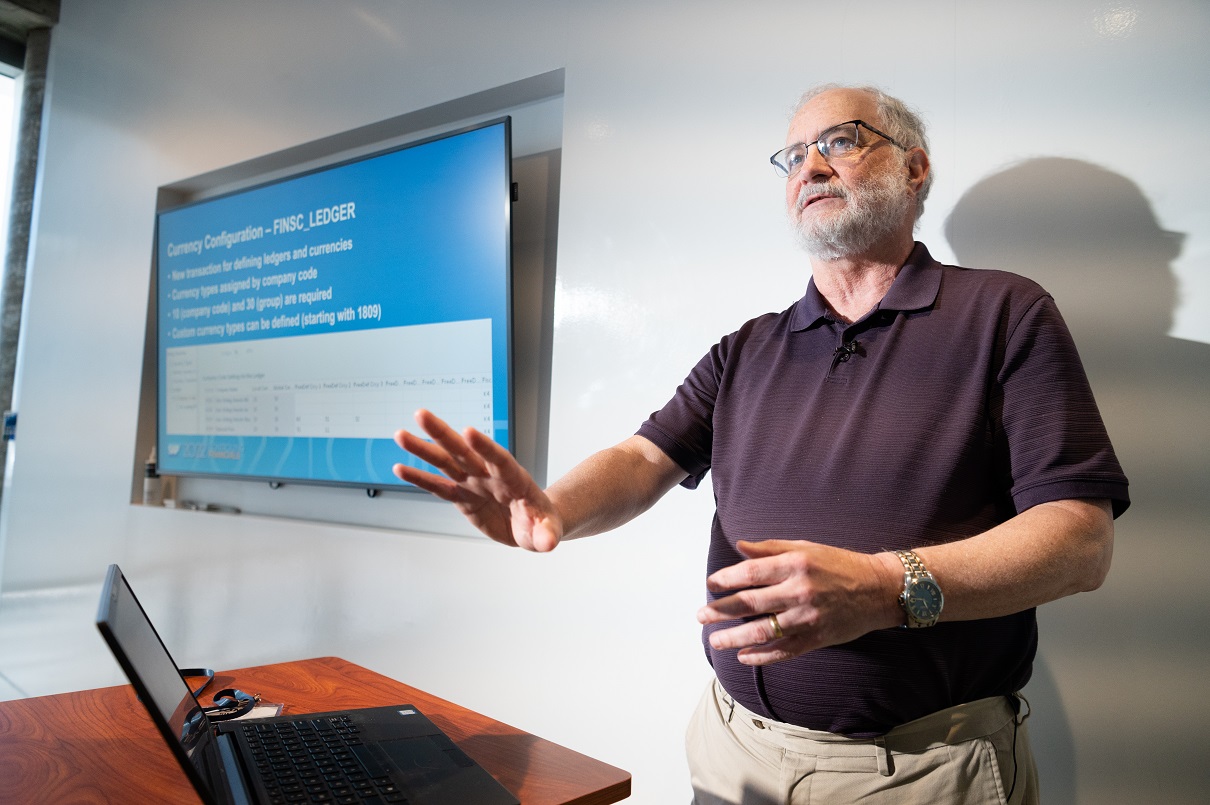 When my company began moving from SAP ECC 6.0 to SAP S/4HANA, I used a sandbox to find out what the conversion would change for Controlling. I tested familiar transactions, checked how actual postings appeared in the Universal Journal, and ran Actual Costing in Material Ledger.
Release context. These observations come from an SAP S/4HANA 1709 sandbox. Use the simplification items and test results for your target release and edition when planning a conversion today.
Read more: Moving to SAP S/4HANA: Controlling Lessons From an ECC Conversion
- Hits: 21413
 I often get asked about the difference between a production order and a process order. Both can collect manufacturing costs, but the choice starts with how production is planned and executed.
Other SAP Controlling objects serve different purposes, from collecting a product’s costs by period to monitoring a maintenance job or departmental spending. This guide compares their uses, master data, and selected transactions.
Read more: SAP Cost Objects in Controlling: Types, Uses, and Transactions
- Hits: 10413
By Paul Ovigele
 SAP Material Ledger FI line item texts help explain where Actual Costing differences are posted at period end. Understanding these descriptions makes it easier to distinguish inventory revaluation, consumption revaluation, and transfers between production levels.
The Post Closing step can generate many accounting entries because differences follow how a material was used. This guide explains the classic posting texts and provides a practical reference for reviewing Material Ledger closing documents.
- Hits: 6601
By John Jordan
Download John Jordan’s free SAP PRESS sample on production order settlement. Chapter 17 of Product Cost Controlling with SAP, third edition, covers settlement configuration and period-end processing.
Read more: SAP Production Order Settlement: Free Book Sample
- Hits: 12261
By Tom King
Compare SAP activity type categories 1–5 in Table 1 to see how the sender quantity is entered or calculated and how it reaches the receiver. The seven tutorials cover direct allocation in KB21N, indirect allocation cycles, quantity recording without allocation, and target=actual allocation.
- Hits: 16733
By Tom King
SAP activity type category 5 supports target=actual activity allocation. In the classic process, SAP calculates actual activity quantities from planned receiver activity inputs and operating rates, then posts the allocation with transaction KNMA.
Read more: SAP Category 5 Activity Types: Target=Actual Allocation