

SAP assembly scrap is used in production planning and product costing to account for expected losses when manufacturing finished or semi-finished products. In SAP S/4HANA, the assembly scrap percentage maintained in the material master helps Material Requirements Planning (MRP) plan additional production quantities and influences the quantities used in material cost estimates.
For example, if a manufacturer needs 100 good printed circuit boards (PCBs) and plans for 10% assembly scrap, SAP can increase the planned production quantity to account for expected losses. Assembly scrap also affects component consumption, production activities, and the planned cost of manufacturing.
In this article, we'll explain how assembly scrap works in SAP, where to maintain the scrap percentage using transaction MM02, and how to analyze its effect on standard costing using CK11N.
Figure 1 illustrates a production plan for 100 finished printed circuit boards (PCBs) with 10% assembly scrap. In this example, the planned component and activity quantities increase from 100 to 110, as shown in the Quantity Costed column. The additional quantities reflect the expected production losses and increase the planned manufacturing cost.
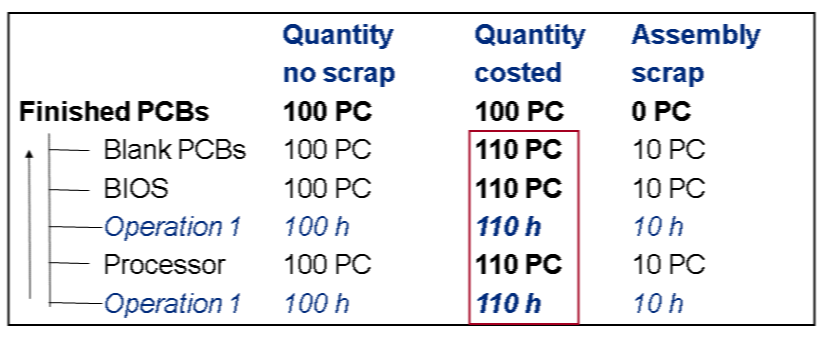
Figure 1: Component and Activity Quantities with Assembly Scrap
Assembly scrap increases the planned manufacturing cost by increasing the component and activity quantities required to produce 100 finished PCBs. In this example, the 10% assembly scrap allowance increases the planned lower-level quantities from 100 to 110. Figure 1 illustrates how these additional quantities are included in the material cost estimate. Actual scrap quantities are recorded separately during production confirmation.
You plan assembly scrap in the MRP 1 view with Transaction MM02 or via the menu path:
Logistics - Materials Management - Material Master - Material - Change - Immediately
Navigate to the MRP 1 view to display the screen in Figure 2.
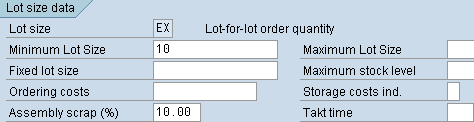

Figure 2: Assembly Scrap Field in MRP 1 View
Complete the Assembly scrap (%) field with your production scrap rate.
You can display how assembly scrap costs are included in a standard cost estimate with Transaction CK11N or via the menu path: Accounting - Controlling - Product Cost Controlling - Product Cost Planning - Material Costing - Cost Estimate with Quantity Structure - Create
A standard cost estimate, including assembly scrap, is shown in Figure 3.

Figure 3: Cost Estimate with Assembly Scrap
Figure 3 shows how assembly scrap affects the standard cost estimate in SAP. The Scrap column displays the cost attributable to planned scrap, while the Scrap Quantity column shows the corresponding additional quantities. Although the example illustrates a 10% increase in relevant component and activity quantities, the resulting cost impact depends on the material cost estimate and its quantity structure. Use transaction CK11N to review these planned scrap costs.
For another perspective on SAP product costing, see our article SAP Mixed Costing, which explains how different production alternatives can be combined in a material cost estimate.
Analyzing Scrap Variances in SAP S/4HANA
Planned assembly scrap is included in the standard cost estimate, while actual scrap is recorded during production. Comparing planned and actual production costs helps identify manufacturing variances, including scrap-related differences.
Depending on your SAP configuration and reporting environment, you can analyze production costs and variances using reports such as PKBC_PKO and PKBC_ORD. These reports help investigate differences between planned and actual manufacturing costs.
For a more detailed explanation of scrap variance calculations, including assembly scrap, component scrap, and operation scrap, see our article Production Variance Analysis in SAP S/4HANA.
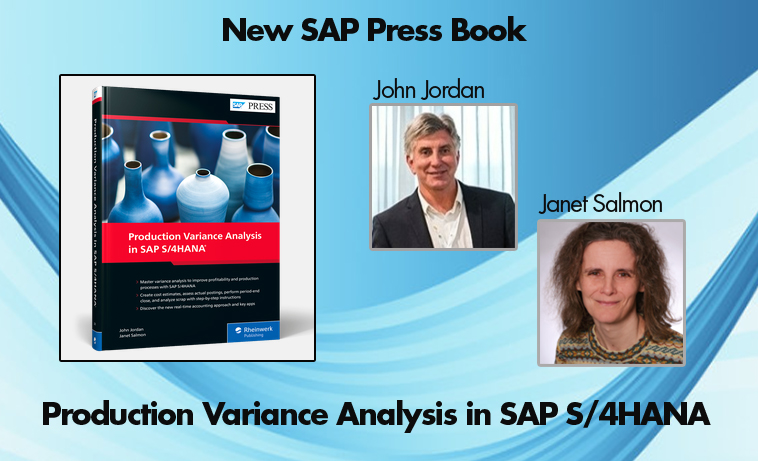
Learn more about production variance analysis in SAP S/4HANA: Explore our SAP PRESS book, Production Variance Analysis in SAP S/4HANA.
Glossary
Assembly Scrap
Assembly scrap is the expected percentage of finished or semi-finished assemblies lost during production. In SAP S/4HANA, the assembly scrap percentage can be maintained in the material master using transaction MM02. It helps MRP plan the quantities needed to meet production requirements and can increase the component and activity quantities included in a material cost estimate.
Activity Type
An activity type represents a measurable service provided by a cost center, such as machine hours or labor hours. In SAP product costing, activity types are used to calculate planned production activity costs. Assembly scrap can increase the activity quantities required to produce the planned number of finished products.
Material Requirements Planning (MRP)
Material Requirements Planning (MRP) is the SAP planning process used to determine the materials and quantities needed to meet production requirements. In SAP S/4HANA, an assembly scrap percentage maintained in the material master can increase planned production quantities to account for expected manufacturing losses.
Standard Cost Estimate
A standard cost estimate calculates the planned cost of producing a material using its quantity structure, component costs, and production activity rates. In SAP S/4HANA, assembly scrap can increase the component and activity quantities included in the cost estimate, affecting the planned manufacturing cost. Transaction CK11N can be used to create and analyze a material cost estimate.
Cost Center
A cost center is master data that identifies where the cost occurred. At the end of the period, a person responsible for the cost center analyzes and explains cost center variances.
Valuation Class
The valuation class in the Costing 2 view determines which general ledger accounts are updated due to inventory movement or settlement.