ERPCorp SAP FICO Blog
- Category: Blog
- Hits: 24418
How a Chemicals Manufacturer Improves CAPEX Request Management with Process Re-engineering & Automation
A specialty chemicals manufacturer based in Delaware employs 5,200 people in 120 countries. They are starting to automate the process of capital expenditure (CAPEX). With SAP Fiori, based on results delivered during its proof-of-concept stage, they aim to reduce customer equipment deployment times and improve process efficiency.
This case study explains how the client of IQX Business Solutions, plans to improve CAPEX request management through IQX Capex.
- Category: Blog
- Hits: 20468
By Ramya Kannan

Introduction
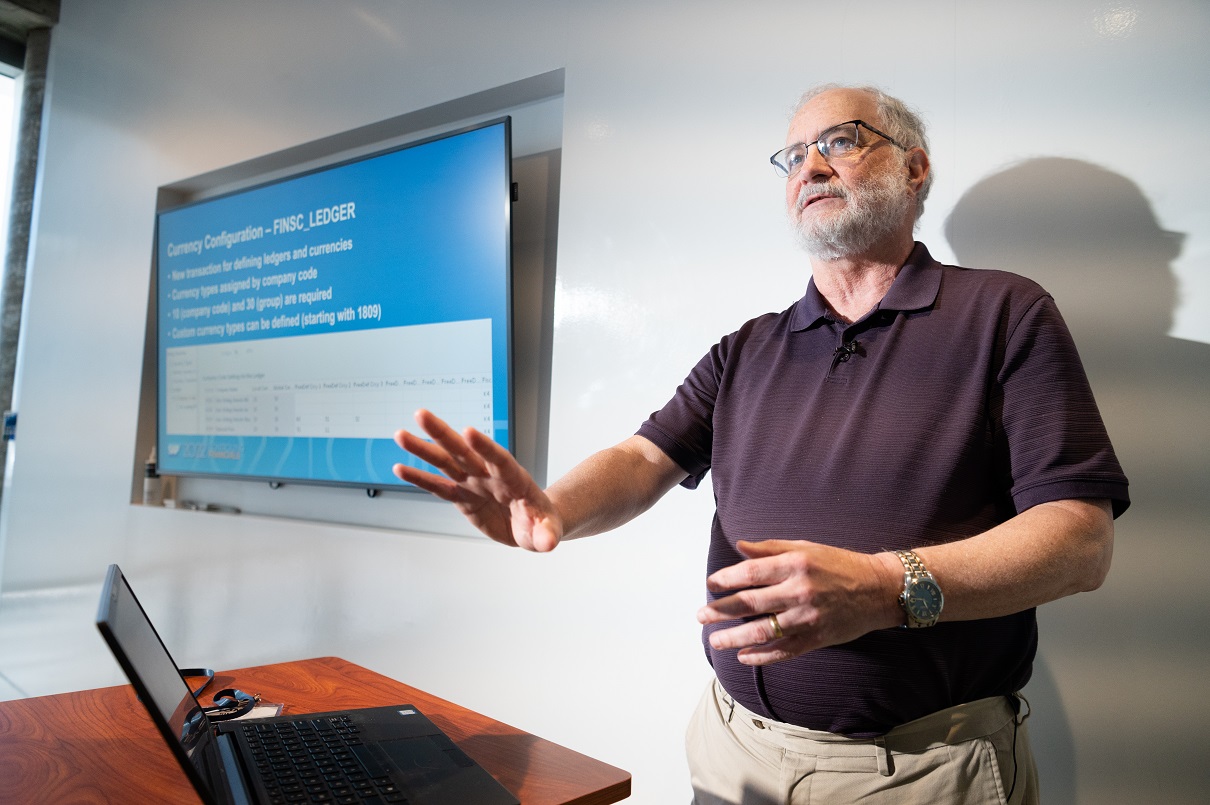
UST offers three accelerator programs to complement RISE with SAP so you can quickly and reliably achieve transformational change in the cloud.
- Category: Blog
- Hits: 31854
by Paul Ovigele

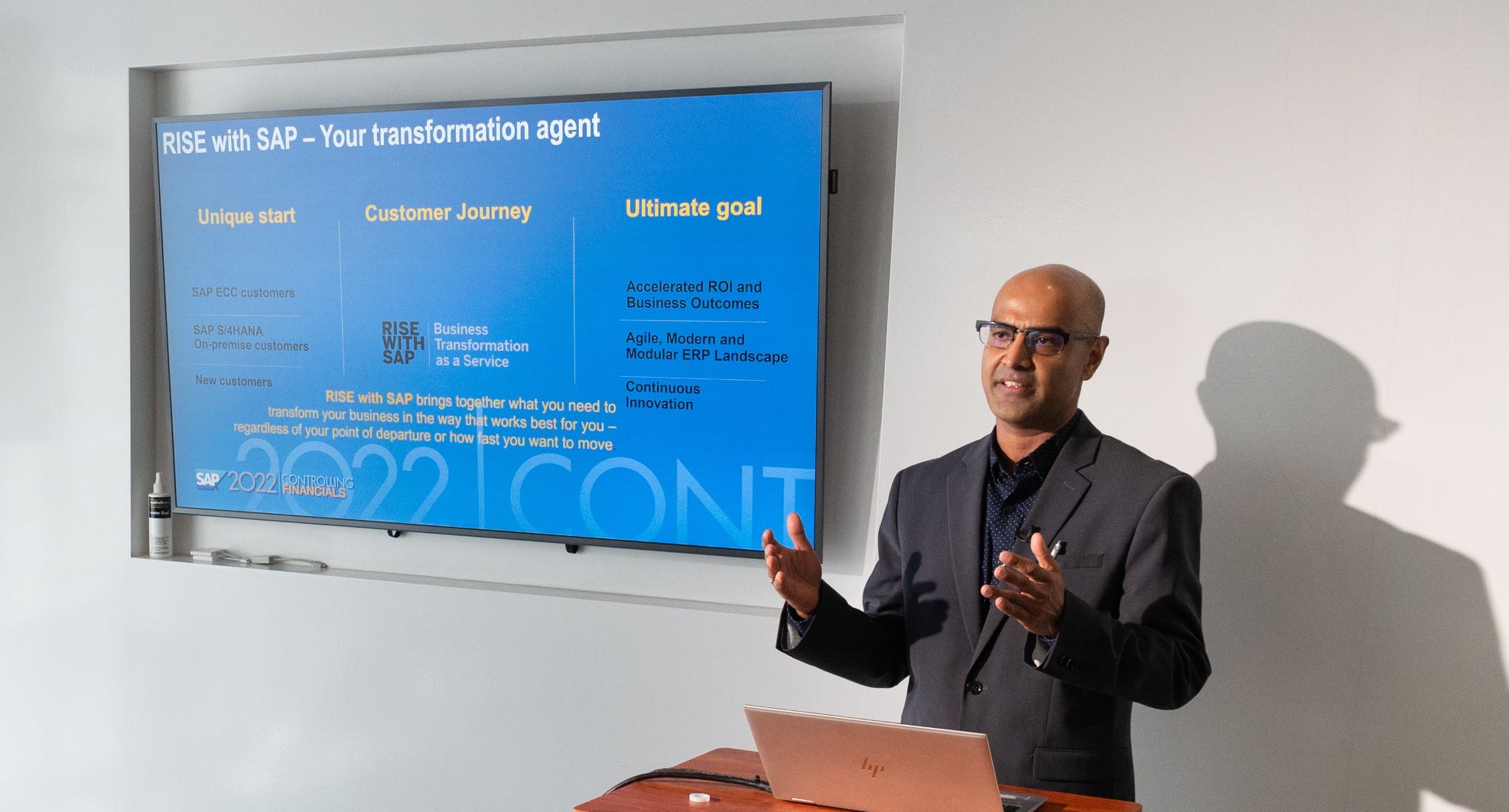
This book helps you set up the SAP Material Ledger, run it smoothly, and configure key settings for currency conversion, ledgers, and valuation views.
We set up and run actual costing, group valuation, profit center valuation, parallel cost of goods manufactured, and balance sheet valuation.
We walk through special scenarios and execute reports to monitor material value flows.
Also, click HERE to learn about the companion SAP Press book: Product Cost Controlling with SAP S/4HANA
- Category: Blog
- Hits: 50380
By Constantino Solis Prego

Introduction
This article explains how to change the cost component structure in six steps without losing cost component history.
The example is based on a typical food/beverage processing plant with two main lines: food/liquid processing and packaging. The initial cost structure follows an accounting scheme, mapping all the ingredients to one cost component, packaging materials to another, and labor, depreciation, and other production activities grouped into other 3 separate cost components.
Read more: How to Change the Cost Component Structure with SAP Material Ledger Active
- Category: Blog
- Hits: 34862
SAP Press Book: Asset Accounting with SAP S/4HANA
by Stoil Jotev

Learn how to configure and use asset accounting in SAP S/4HANA.
The book is organized into the following chapters:
Table of Contents
- Introduction
- Chapter 1 Organizational Structures
- Chapter 2 Master Data
- Chapter 3 Asset Valuation
- Chapter 4 Business Transactions
- Chapter 5 Periodic Processing
- Chapter 6 Asset Reporting
- Chapter 7 Migrating Asset Data
- Appendix A: Obsolete and New Transaction Codes and Tables in SAP S/4HANA
- Glossary
- Category: Blog
- Hits: 45679
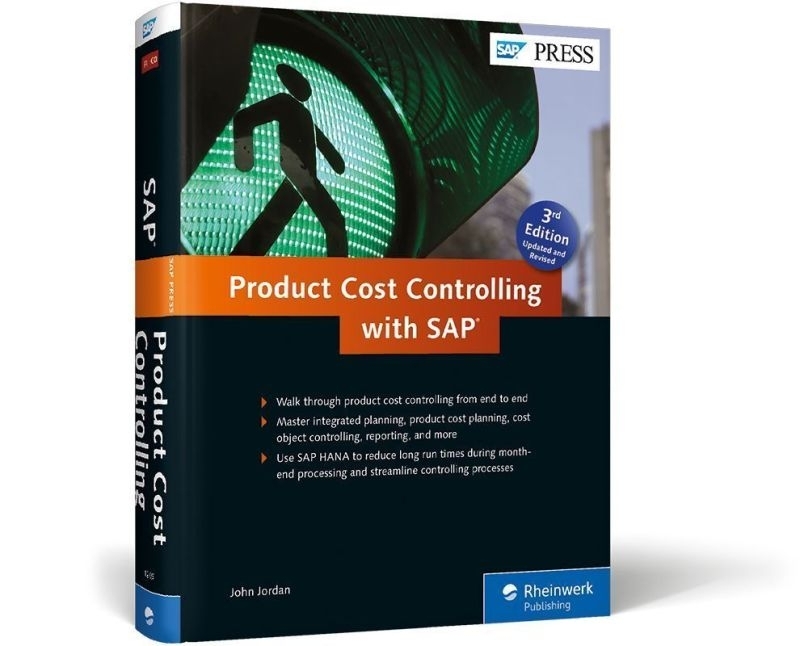
SAP Product Cost Controlling helps organizations plan, calculate, monitor, and analyze manufacturing costs. In SAP S/4HANA, Product Cost Controlling integrates Product Cost Planning, Cost Object Controlling, Material Ledger, and Actual Costing to improve cost transparency and profitability.
This guide introduces the 20 chapters of Product Cost Controlling with SAP, covering costing master data, standard cost estimates, production orders, work in process (WIP), variance calculation, settlement, and reporting.
Explore the chapter summaries and SAP screenshots below to understand the end-to-end product costing process, including foundational concepts that remain relevant to SAP S/4HANA.
Since publishing Product Cost Controlling with SAP, I've also authored Product Cost Controlling with SAP S/4HANA, which explores product costing in the S/4HANA environment. Both books are available from SAP PRESS and provide guidance for SAP professionals working with product cost planning, manufacturing cost analysis, and controlling.
- Walk through SAP product costing from end to end with easy-to-understand graphics
- Initial cost planning, cost estimates, production order costing, reporting, and actual costing
Read more: SAP Product Cost Controlling: Complete Book Guide
- Category: Blog
- Hits: 51280
Welcome to the latest SAP S/4HANA edition of this groundbreaking SAP book. Our new edition, on publication, immediately entered and remains in the SAP Press Top Ten.
- Category: Blog
- Hits: 58843
by John Jordan

Introduction
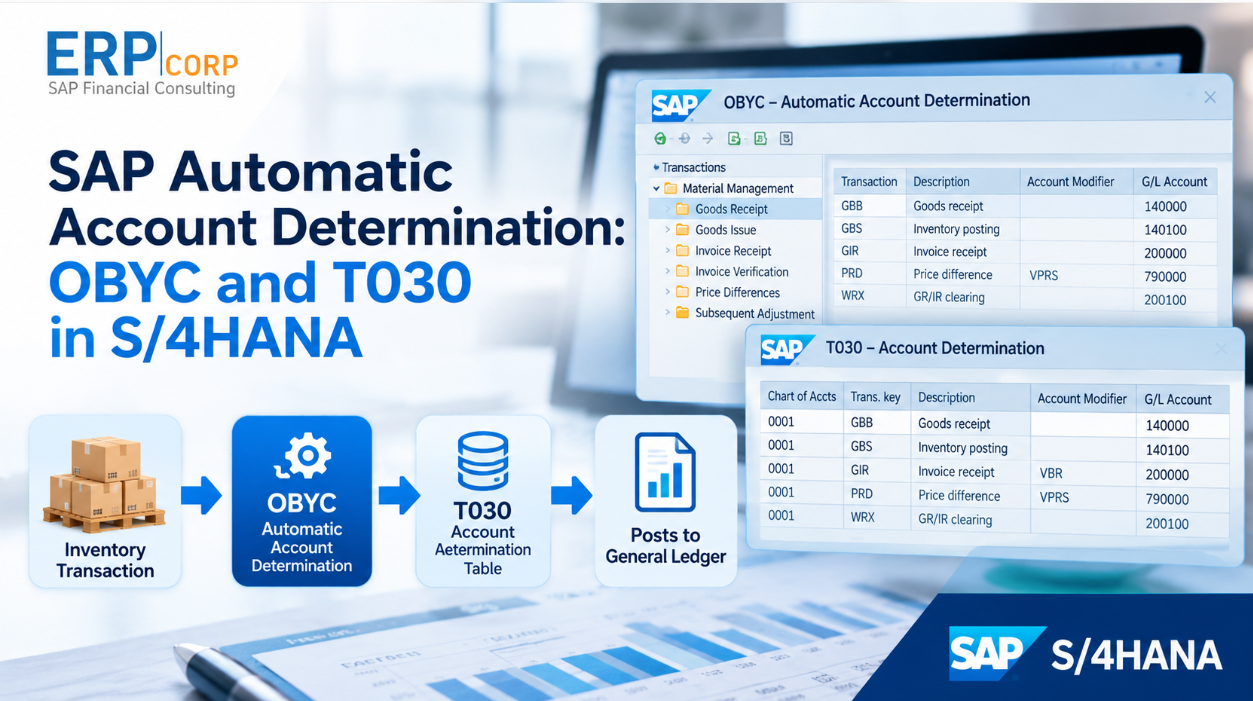
In SAP S/4HANA, automatic account determination controls which General Ledger (G/L) accounts are posted when inventory movements occur in Materials Management (MM). Correct account determination is essential for accurate inventory valuation, production cost reporting, and integration between Materials Management and Financial Accounting (FI).
A common question is how to identify the G/L account that SAP automatically selects for a particular goods movement. For example, when raw materials are issued to a production order, SAP uses account determination settings to identify the inventory account and the corresponding consumption account.
Transaction OBYC is used to configure automatic account determination, while table T030 stores the relevant G/L account assignments. You can display these settings using transaction SE16N, even when you do not have authorization to change the configuration in OBYC, provided you have the necessary table-display access.
In this article, we explain how to display and analyze SAP automatic account determination entries using OBYC, T030, transaction key GBB, account modifier VBR, and valuation class. We also demonstrate how these settings help determine the G/L accounts used when materials are issued to production orders.
Read more: SAP Automatic Account Determination: OBYC and T030 in S/4HANA
- Category: Blog
- Hits: 48238
by Tom King